|
Conference Schedule for 4th African Culture and Democratic Dialogue
Thursday 22.10.15 to Saturday 24.10.15 Friedrich-Engel-Str.22, 14473 Potsdam Germany Conference Themes: The relevance of women and youth empowerment for better life in Africa Women and children are always the first victims of violence and political unrest whenever it breaks out. At this moment, African women and children are still exposed to diverse violence including, domestic violence, child abuse, rape and sexual assault. Many of the victims remain silent for fear of stigmatization because there are no tangible supports for them. Some men still engage in polygamy without taking care of the children from the different wives. Women are left alone in most cases to cater for the children while the man run away with other women. All these are possible because of the absence of relevant laws to penalize offenders. How could African women and migrant organisation empower and support African women to demand for laws that give protection to women and children? Integration and participation of migrants in political activities. When it comes to participation in political activities, many African migrants have different opinions. Some have decided not to have anything to do with politics because of their claimed terrible persecution experiences from the political system. However, it is clear that there is a gap in the way politics is practiced in Africa and in Germany. How can immigrants prepare themselves to take part in political activities in Germany? What are the basic requirements for immigrants to get registered into any of the political parties in Germany? Roles of African migrants in combating Armed terrorist. Boko Haram has caused a lot of damage to the Nigerian economy. The group is known to have killed, kidnapped and raped many women and children. Report says that Boko Haram enjoys the donations of money and arms from outside the country. What roles can the African migrants play to cut off financial and ammunition supply routes to Boko Haram? Many organisations joined the world community to demand for the release of the 300 school girls kidnapped by Boko Haram. Where are these girls? Participation of youth in economic and political development in Africa and the results of their contributions. Many immigrants would like to take part in projects that contribute to economic development of Africa, but the lack of adequate information could pose a major barrier. We would like to listen to two different reports of successful business engagements in Nigeria and in Ghana. What can the African immigrant learn from the experiences of returnees entrepreneurs who have successfully established themselves. Self employment among African immigrants in Germany is growing but many still lack the real information necessary for the establishment of private business. Where could migrants turn to when it comes to the questions of financial support and establishment of private businesses? How could African migrants assist governments in their response to health challenges? Ebola struck when no one was expecting it to strike. It was confronted by local and international health workers. Ebola victims tents were vandalized by irate youths in Liberia for lack of adequate information. What roles are African immigrants playing to make sure there is enough and quick health information for both migrants and youth in Africa? While there are many centers where migrants without residence permit could get health treatment, what are the possibilities of migrants without residence permit getting health insurance? Contributions of African youth in fight against corruption Many people inside and outside Africa believe that fighting corruption in most African countries have not succeeded. The youths are among the victims with reports from many universities pointing fingers at lecturers to be corrupt like the politicians. Some evidence suggests that many students have to either pay money or sleep with lecturers to get degrees. What is then the future of fighting corruption in Africa if youth play along with the corruption players? What are the possible Political and economic future of migrants/refugees willing to return to Africa? Many refugees still regard Africa as a no go place when it comes to discussion about returning to Africa. Some African political leaders in their efforts have many things to point at as possible reasons why they are calling for African immigrants to return to Africa. What are the possible infrastructures that guarantee that the returnees are not going to become stranded and end up in jails if they continue to confront corruption? Is there freedom of press in African countries? Students and Migrants cultural exchange Student unions are known to be among the voices that the government respect. What roles are the African student unions playing in demanding for transparent government and an end to corruption in Africa? How can the African student benefit from a collaboration between African student union and their counterparts in Europe? Cultural night Music and dancing....... Participation in this conference is free, however participants that are not presenting papers are to be responsible for their accommodations and transportation. Refugees, students and unemployed could apply for support for transportation and accommodations. Register to attend African Culture and Democratic Dialogue 17-19 Oct. 2013
|
Human traffickersWho are the victims?
Helpless women and men who are seeking for better life that their countries deny them remain easy targets of Human traffickers. Experience shows that human traffickers do deceive many young people into fleeing their lands promising jobs and other goodies in Europe and Americas. Why do Refugees decide to campaign against human trafficking? The activities of human traffickers will continue unabated and more African promising youths will continue to fall their victims. We do not want more deaths of our fellow brothers and sisters to continue. What methods are we using in this campaign? From youths to youths campaign. On the job campaign. We want to support seminars in schools that will focus on telling the students the truth about what await them on the dangerous journey through the deserts and the seas. We want to tell the youths that they really need real documents before they could be employed in Europe. We want to tell them and show them the proof that the Human traffickers lie to them when they tell them that they could start work as soon as they arrive in Europe. We want them to know that it is difficult to live as illegal immigrants in Europe. Campaign materials; Documentary films, books, hand bills and educational materials. How do we finance this campaign? Through donations and membership contributions. How can you help? You can ask and send some of our hand bills to youths in Africa. You can be a member and you can support this project through donations. Project Demvote He praised the effort of the migrants for organising this project and pledged the cooperation of the city of Belzig to the them.
In her speech, Dr. Salua Nour a professor of African origin at the Free University in Berlin advised the participants to be “agents of change”. She praised the determination of the participants to acquire democratic experience; pointing out that there is need to promote democracy and participation. She cited the example of Egypt where “a gentle man sits in office for more than twenty years and making effort to succeed himself with his son” as undemocratic. She encouraged the participants to see beyond multiplication of the acquired experience through forums and newsletters but to try and put all what they learn during this training into practice in their new home and when they return to their countries of origin. She however quickly pointed out that democracy in Germany as well has its deficiencies. The first training which also exposed activities and benefits of ICC (International Criminal Court) to the participants was presented by Mr. Dexter Sumner a research analyst who has spent quit a lot of time working and studying the international court. While Thuringian Afro-German politician Zeca Schall delivered a speech bordering on Political system and integration in Germany. Fifteen participants are currently taking part in this project that runs from 29th of May 2010 till 30th of August 2010. Project DEMVOTE was sponsored by Stiftung Nord-Sued-Bruecken, “Integrationbeauftragte des Landes Brandenburg” and “Bundesministerium fuer wirtschaftliche Zusammenarbeit und Entwicklung Network and Dialogue Against Discrimination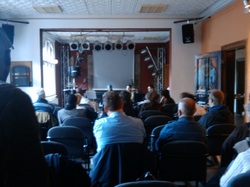
This conference was organised in cooperation with MIR e.V. and RAA Brandenburg.
It looked into various ways of promoting better cooperation between migrants and the citicens. The conference was declared open by the minister of works in the state of Brandenburg, minister Gunter Baaske The conference took place at Jugengzentrum Pogo , Berliner str. Bad Belzig German Language for Migrants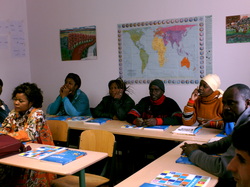
German Language Learning for Beginners 2009
Cagintua e.V. in cooperation with Diakoniewerk Potsdam organized a three month languge course for the refugees at the refugees home in the city of Bad Belzig. Newly arrived refugees find this project very helpful. It allowed them to learn some basic German languge for daily use. The project was sposored by the office of Integration, State of Brandenburg Award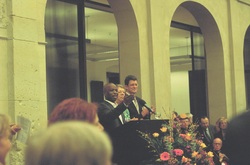
2011
Cagintua president, Obiri Mokini was honored with "Dreikönigspreis" Award in Berlin. Empowering vulnerable groups to participate in the budgeting processes at local level’
Decentralization at the district assembly level comprises of elements that encourage all manner of persons - especially the vulnerable groups at the local levels to actively participate in every decision making process since those decisions affect them directly or indirectly. However, this is difficult to realize at the district assembly levels as none of these groups inputs are sought when it comes to critical decision taking. One of such critical decisions is on budgeting and allocation of funds. The principles of good governance stipulates that there must be participation at every stage of decision making in the district as to how various activities concerning the vulnerable groups are budgeted for. The vulnerable groups that have been identified include women and Children, PLHIV, PWD and the Youth. The district assembly common fund deductible at source is meant to make allocation for all of these groups mentioned above, however because their interests are not represented, their needs are not factored properly into the budgets of the district. For instance PLHIV groups have a 0.5% statutory allocation in the common fund but have never been released to fund any of the HIV activities. Women would need to be represented in the district assembly budgeting processes to be able to present the peculiar needs of women and children that should be funded by the assembly. PWDs must also be involved in budgeting to articulate their needs to be factored in such as procuring wheelchairs and even influencing redesigning of public facilities for their convenience bearing in mind that they have 2% allocation of the Common Fund. For these reason, the vulnerable groups would have to be empowered to actively participate in the budgeting and allocation of funds in the district assembly level which will lead to their needs being properly catered for. It is against this background that this joint project is being undertaken by OPMF and Cagintua e.V to ensure the inclusion of the vulnerable in the district budgeting processes. 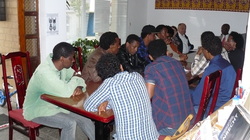
Refugees and the law
„It is important that visitors be they refugees or migrants familiarise themselves with the laws of their new home. This would protect them from falling into trouble with the law enforcement agents all the time.“ This was remarks from cagintua president, Obiri Mokini while welcoming the particiapnts and the representative of the Burgermaster to the Seminar. The seminar which began at 14:00 allowed particiüants to ask many questions borthering on their asylum process to how to get residence permit, how to avaid deportation and what to do in case the asylum application is rejected. The lawyer Mr. Jan-olaf Moyzes, was able to provide answers to all the questions asked by the participants during this seminar. Some of the articipants refused to ask the lawyers their questions during the presentations. They asked the moderator to allow them ask their questions in privacy. The break time was prolonged by thrity minutes to allow those that had questions to ask the lawyers in privacy table their questions before the lawyer during the break time. Among the questions that were asked publicly during the presentation were. Questions borthering on health issues. „How could refugee get residence permit if he/she is sick? Another question that attracted a lot of coments and discussions among the participants is. „What to do if the foreign office demand that a refugee submit his passport for visa?“ If a refugee is already working in the country. He is paying tax. Then the foreign office asked him to bring his passport so they could issue him residence permit, what to do? Many of the participants argued that the refugee would get residence permit because he has been working and paying taxes. The awyer saw it in a different way. Working and paying taxes alone do not authomatic qualifies a refugee for residence permit. The foreign office reserves the right to use the passport the refugees submit to them for his deportation even though the said refugee has been working and paying taxes for long time. To the questions of, „Can the foreign office force a father of a baby to make DNA test,“ The lawyer replied that a law been put in place two years ago to stop the foreign office from forcing refugee fathers of children to make DNA test to prove that they are the real fathers of their children. The lawyer further pointed out that while the Dublin convention allows the deportation of refugees that arrrived Germany from other Eu Countries, refugees from Greec, Romania and Italy may not be deported. Another refugee asked the lawyer about what happens if a refugee who live in seperate camps have a baby together. What happens if one of them is deported? Where does the baby go? „If both of them have right to the child, that is if the father of thee baby also have the fatherschaft anerkennung for the baby, it may be difficult to seperate them because they are now seen as family. The seminar was a success going by the numbers of the participants, the interesting contributions of the particiapants and the numbers of questions asked and answered. Most of the refugees heard about the seminar just a day to the seminar date and they were able to take part in the seminar. The refugees that took part in the seminar were very happy they did because they were able to learn a lot from their participation in the seminar. Both the questions asked during the presentation and those asked the lawyer in privacy proved very helpful. This was measured by the praises the particiaapants gave to the lawyers and the organisers of the seminar during and after the closing remarks. This seminar was sponsured by; LAP Bad Belzig, Amadeu Antonio Satiftung, Flüchtlingsrat Brandenburg and Aktionsbüdnis Brandenburg. It was carried out in cooperationn with Infocafe der Winkel. Photograph by Burkhard Pranke |
|
|